
Role of AI in Threat Detection
Cybersecurity is more important than ever. Cyber threats are becoming more complex and widespread, putting businesses, governments, and individuals at risk. Traditional methods of detecting these threats often can't keep up with the new and more advanced attacks. This is where Artificial Intelligence (AI) comes in, offering a powerful solution to help improve cybersecurity. In this guide, we’ll look at how AI plays a key role in detecting threats, how it strengthens security, and why it's becoming a must-have tool for businesses to stay ahead of cybercriminals.
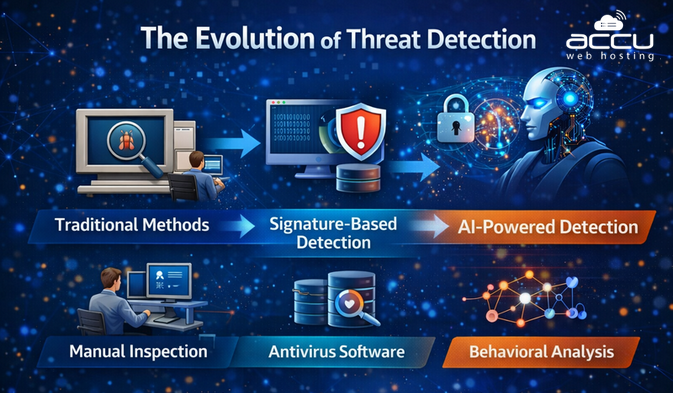
The Evolution of Threat Detection
Cybersecurity traditionally relied on signature-based methods for detecting threats. These systems compared incoming data to known attack patterns (signatures) to identify potential threats. While effective in some scenarios, signature-based detection falls short when faced with new, unknown threats, such as zero-day attacks or advanced persistent threats (APTs), which do not yet have established signatures.
With the increasing frequency of complex cyberattacks, organizations need more proactive, adaptive, and efficient methods of threat detection. AI, particularly machine learning (ML) and deep learning (DL), offers solutions that can significantly improve cybersecurity practices.
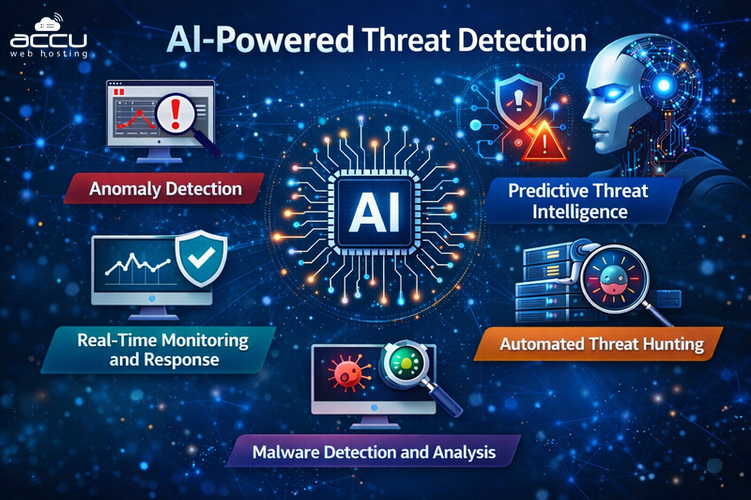
AI-Powered Threat Detection: How Does It Work?
AI is revolutionizing threat detection by enabling systems to learn from large volumes of data, recognize patterns, and make intelligent decisions without human intervention. Here’s how AI helps in identifying and mitigating cyber threats:
1. Anomaly Detection
AI systems can monitor network traffic, user behavior, and application activities in real-time to identify anomalies—actions or patterns that deviate from the norm. For example:
-
User Behavior Analytics (UBA) powered by AI can flag unusual login patterns, such as logging in from multiple geographic locations in a short period, which could indicate credential theft.
-
Network traffic analysis can identify abnormal spikes in data transfer, which may signal a data exfiltration attempt.
By continuously learning from historical data, AI systems can adapt to new attack vectors, making them effective at detecting both known and unknown threats.
2. Predictive Threat Intelligence
AI-powered tools can analyze vast amounts of data from diverse sources—such as open-source intelligence (OSINT), threat feeds, and social media—to predict potential threats before they occur. These tools use advanced algorithms to identify patterns that might suggest an impending attack, helping organizations prepare for threats proactively.
For example:
-
Phishing attacks can be detected through analysis of email content and sender information, identifying characteristics of known phishing campaigns.
-
Advanced persistent threats (APTs) can be anticipated by analyzing threat actor behavior and tactics, techniques, and procedures (TTPs).
3. Real-Time Monitoring and Response
One of AI's greatest strengths is its ability to process vast amounts of data in real time. In threat detection, this means AI systems can continuously scan network traffic, endpoint activity, and logs for signs of suspicious behavior or intrusions.
-
Intrusion detection systems (IDS) and intrusion prevention systems (IPS) can leverage AI to instantly recognize malicious activity and automatically trigger responses, such as blocking IP addresses or isolating compromised devices from the network.
-
AI-driven Security Information and Event Management (SIEM) solutions can prioritize alerts, reducing false positives and ensuring that security teams focus on high-priority incidents.
4. Automated Threat Hunting
AI is also playing a crucial role in automating threat hunting—the proactive search for potential security threats in an organization’s environment. Traditional threat hunting is often time-consuming and resource-intensive, requiring skilled security analysts to manually analyze data for signs of attack.
AI-powered threat-hunting tools can automate this process by:
-
Scanning historical data for patterns of suspicious activity.
-
Identifying subtle signs of threats that might otherwise go unnoticed.
-
Providing security analysts with actionable insights, allowing them to focus on investigating and mitigating active threats rather than sifting through endless logs.
5. Malware Detection and Analysis
AI is particularly effective in malware detection and analysis, especially in identifying zero-day and polymorphic malware—types of malware that mutate or exploit unknown vulnerabilities to avoid detection. Traditional antivirus programs rely on predefined signatures of known malware, but AI systems can use behavioral analysis and heuristic techniques to identify malicious actions. Machine learning models can train on known malware patterns and predict new variants based on their behavior, even before signature updates are released. Deep learning can be employed to analyze suspicious files, recognize the underlying code, and detect new types of malware with a higher degree of accuracy.
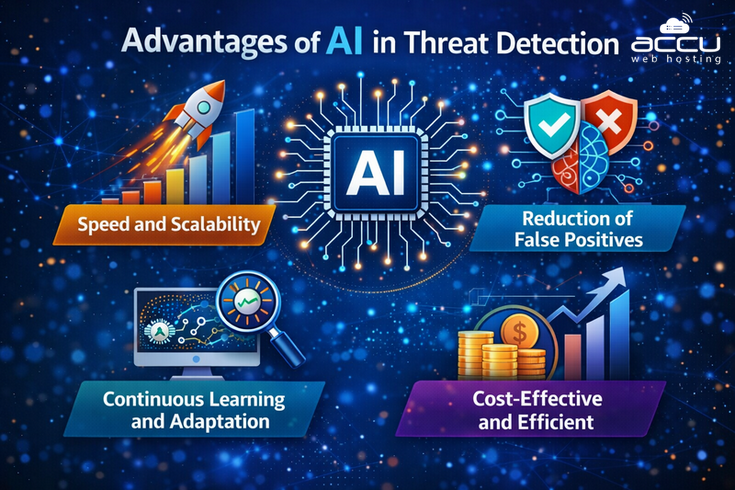
Advantages of AI in Threat Detection
1. Speed and Scalability: AI-powered systems can handle large volumes of data far more efficiently than human analysts. This is particularly important as businesses generate massive amounts of data daily. AI can analyze this data in real time, providing immediate feedback and action, while human intervention is reserved for more complex decision-making.
2. Reduction of False Positives: Traditional security tools often generate numerous false positives, causing alert fatigue and making it difficult for security teams to prioritize threats. AI improves the accuracy of threat detection by learning from past data and refining its detection models over time. As a result, it can reduce false positives, allowing teams to focus on genuine threats.
3. Continuous Learning and Adaptation: AI systems can continuously learn and evolve, making them highly adaptable to new attack methods. As attackers develop new techniques, AI models can adjust their detection strategies based on incoming data, improving accuracy and effectiveness over time.
4. Cost-Effective and Efficient: While AI-based solutions may require an initial investment, they can ultimately save organizations money by automating routine threat detection tasks and reducing the need for manual intervention. This allows security teams to focus on more strategic initiatives.
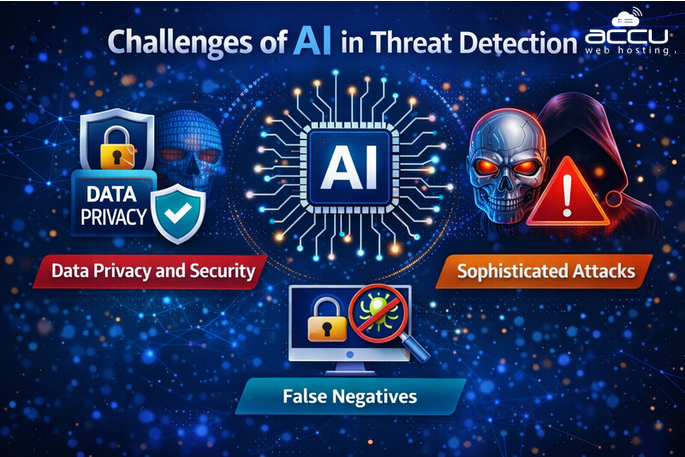
Challenges of AI in Threat Detection
While AI brings significant benefits, there are challenges to consider:
-
Data Privacy and Security: AI systems require large datasets to train and improve, which can sometimes raise concerns about data privacy and security. Organizations must ensure that they are using secure, anonymized data to train AI models.
-
False Negatives: Though AI reduces false positives, there’s still a possibility of false negatives, missed threats. This means that AI systems should always complement human oversight and not replace it entirely.
-
Sophisticated Attacks: As AI becomes more prevalent in cybersecurity, cybercriminals are also adopting AI to create more sophisticated attacks, such as AI-driven malware. This could lead to an ongoing arms race between attackers and defenders.
Conclusion
AI is transforming the landscape of threat detection by enabling organizations to detect, analyze, and respond to cyber threats faster and more accurately than ever before. Through anomaly detection, predictive intelligence, real-time monitoring, and automated threat hunting, AI is helping businesses stay one step ahead of cybercriminals.
However, AI is not a silver bullet. It works best when used alongside traditional security measures, with human expertise guiding its application. As cyber threats continue to evolve, the integration of AI into threat detection will play an increasingly critical role in safeguarding our digital environments. By leveraging AI's capabilities, businesses can better defend themselves against today’s most advanced and persistent cybersecurity threats.