
While people continue to say affiliate marketing is dead, the competition keeps growing. There are over 80% businesses that have their affiliate programs, possibly more, so you are not out of options. However, all programs are not equal. If you partner with the wrong program by mistake, your hours of work and efforts will result in little return; on the other hand, picking the right one can turn a simple blog post, YouTube review, or TikTok tutorial into a consistent income stream.
This is why affiliate competitor analysis is important; understanding how other affiliates make money, what they promote, and which tactics they use, you can:
- Find better-paying programs with higher commissions.
- Discover programs with better conversion rates and long-term earning potential.
- Identify content opportunities competitors have missed.
You can avoid guessing and directly reverse-engineer the methods and apply them in your own activities..
What is Affiliate Competitor Analysis?
In simple terms, affiliate competitor analysis is the process of researching:
- Other affiliates in your niche → what products they promote, what content works for them.
- Affiliate programs they rely on → commission rates, cookie durations, payouts.
- Content strategies → reviews, comparisons, tutorials, social media promotion.
The goal is clear: find the most profitable programs and proven strategies so you can earn more without wasting time on low-performing offers.
Example:
- A promotes a software tool with a 10% commission and a 30-day cookie.
- B promotes a direct competitor offering 30% recurring commission with a 90-day cookie.
- Both write similar reviews, but Affiliate B earns 3x more simply by choosing the smarter program.
The 6-Step Affiliate Competitor Analysis Framework
To maximize your earnings, you need to have a system that evaluates and compares affiliate programs. Here, I am sharing a step-by-step framework that can be applied to every niche.
Step 1: Find Affiliate Programs in Your Niche
The first step is to understand the market. If you don’t know what’s available in the market, you cannot compare affiliate programs.
There are various things you can do to find affiliate programs.
1. Using Google Search - “Best [product] affiliate programs”, “Top [niche] tools with affiliate programs”, “[niche] + affiliate program”

2. You can join affiliate networks like Awin, CJ, Impact, and PartnerStack.
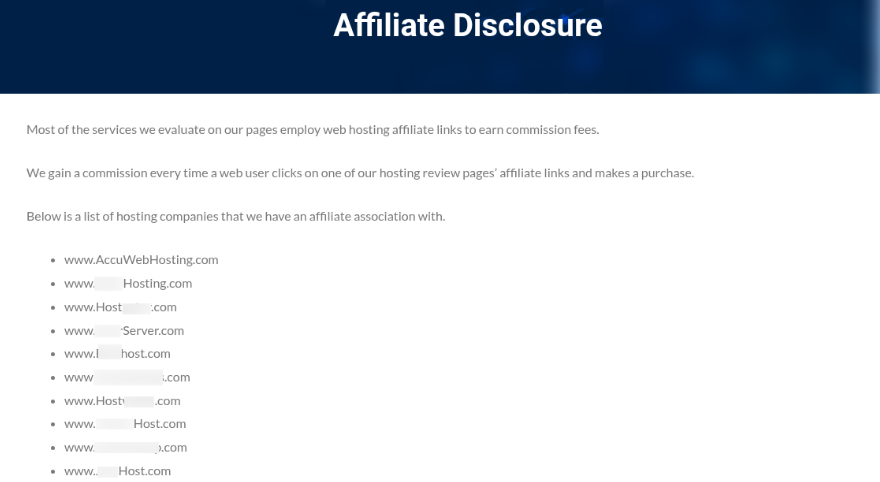
3. Check competitor websites, find their affiliate disclosures, and outbound links.
Create a list of at least 5–10 programs in your niche so you can compare them side by side.
Step 2: Compare Commission Structures & Cookie Durations
Not all programs pay the same. A large percentage of commission might look attractive, but other things matter too.
- Commission type: Flat (one-time) vs. Recurring (monthly).
- Payout rate: 10% vs. 30% can be the difference between pocket change and serious income.
- Cookie duration: 7 days vs. 90 days makes a significant impact; longer cookies increase the chances of getting credit.
Build a comparison table with commission %, payout model, and cookie length for each program.
Step 3: Review Competitors’ Content Strategies
Once you know the programs, check how other affiliates promote them. This will help you identify what works in your niche.
- Look at top-ranking blogs in Google for “best [product]” or “[product] vs [product].”
- Study YouTube reviews, what products are they pushing?
- Monitor social platforms like TikTok and Instagram; how are affiliates framing the product?
Check these:
- Do they focus on reviews, tutorials, or comparisons?
- What CTAs (calls to action) are they using?
- Which content type (listicles, case studies, video reviews) gets the most engagement?
You can use tools like Ahrefs or Semrush to see what keywords competitors rank for, and which affiliate pages drive them traffic.
Step 4: Track Affiliate Links & Find High-Performing Programs
Now that you know what they’re promoting, dig deeper into the actual affiliate links.
- Right-click competitor links → “Copy link” → check the affiliate network/program.
- Use Chrome extensions like NoFollow or Link Redirect Trace to uncover hidden affiliate links.
- Track which links are used most often across blogs, YouTube, and forums.
If multiple top affiliates are promoting the same program, it’s likely to be high-converting and reliable.
Step 5: Test Sign-Up Experience, Dashboards, and Support
Not all affiliate programs are easy to work with. Before committing, test them yourself.
- Sign up for the program and check approval speed.
- Explore the dashboard. Is it user-friendly and provides important KPIs and metrics? Does it show EPC (earnings per click), conversion data, and real-time stats?
- Check if they provide marketing resources, such as banners, email swipes, or deep linking tools.
- Test support, do they respond quickly if you have a question?
Work only with programs that make it easy to track, promote, and get paid. Reliable programs pay on time, offer transparent reporting, and provide responsive affiliate managers.
Step 6: Choose Programs with the Best Long-Term Potential
Don’t just chase high commission rates; think long term.
- Does the product solve a real need? → Easier to promote.
- Is the company reputable? → Avoid programs that disappear after 6 months.
- Recurring vs. one-time payouts? → Recurring can build passive income.
- Market trends → Will demand for this product grow or fade?
A 10% recurring commission SaaS product in a growing niche (like AI tools) may outperform a 50% one-time payout in a declining niche.
Practical Tools for Affiliate Competitor Research
Competitor analysis becomes much easier when you use the right tools. Here are some of the most useful ones for affiliates:
|
SEO & Keyword Tools
Traffic & Market Insights
Ad & Content Spy Tools
|
Affiliate Networks
Affiliate Link Tracking Tools
|
Combine SEO tools with affiliate spy tools. For example, find a top-ranking “Best VPN” blog via Ahrefs, then trace all their affiliate links with Link Redirect Trace.
How to Spot & Leverage Opportunities?
Competitor analysis isn’t just about copying others; it’s about finding gaps and weaknesses you can turn into profits.
Here’s how affiliates can identify and exploit opportunities:
- Find Programs with Higher Payouts in the Same Niche. If most affiliates push Product A with 10% commission, but Product B offers 30% recurring for the same solution, you can promote B and earn more per customer.
- Look for Underserved Niches by checking forums, Reddit, or Quora, and see what products people ask about that aren’t heavily covered in affiliate blogs.
- Enter early into trending markets (AI tools, green tech, privacy software).
- Improve on Competitor Content. If competitors write 1,000-word reviews, create 3,000-word detailed guides with comparisons, FAQs, and visuals.
- If they only use blogs, diversify with YouTube reviews or TikTok tutorials.
- Many affiliates target generic “best [product]” keywords. You can target purchase-intent keywords like:
- “[Product] discount code”
- “[Product] vs [Product]”
- “Is [Product] worth it?”
These keywords often convert much higher than generic terms.
- Look at the program's reputation. If programs are known for late or missed payments, avoid them.
- By switching to reputable programs, you gain trust and stability in your income.
Don’t just follow the crowd. See what’s working, then identify angles that your competitors are missing or areas where you can improve on their approach.
Conclusion
By:
- Identifying the right programs in your niche,
- Comparing them with clear metrics like EPC, cookie duration, and conversion rate,
- Using the right tools to uncover competitor strategies, and
- Spotting opportunities they’ve missed,
…you set yourself up for consistent, scalable affiliate income.
The truth is, affiliates who take the time to analyze competitors and choose wisely will always have an edge. Instead of guessing, you’ll know exactly where your time and effort pay off best.