
Application Pool Recycling in IIS helps maintain server performance and stability by periodically restarting application pools. This prevents memory leaks, stale sessions, and unresponsive applications.
By configuring periodic recycling, you can schedule automatic restarts based on time intervals, requests, or specific events without manually restarting the application pool.
Why Periodic Recycling is Important
- Prevents memory leaks from long-running applications.
- Reduces application downtime due to unexpected crashes.
- Improves overall web server performance and reliability.
Requirements
- Windows VPS or server with IIS 7 or later installed.
- Administrative access to IIS and the application pool you want to recycle.
- RDP access to the server.
Step-by-Step Guide: Setting Periodic Recycling
Step 1: Log in to Your VPS
Connect to your Windows VPS using Remote Desktop Protocol (RDP).
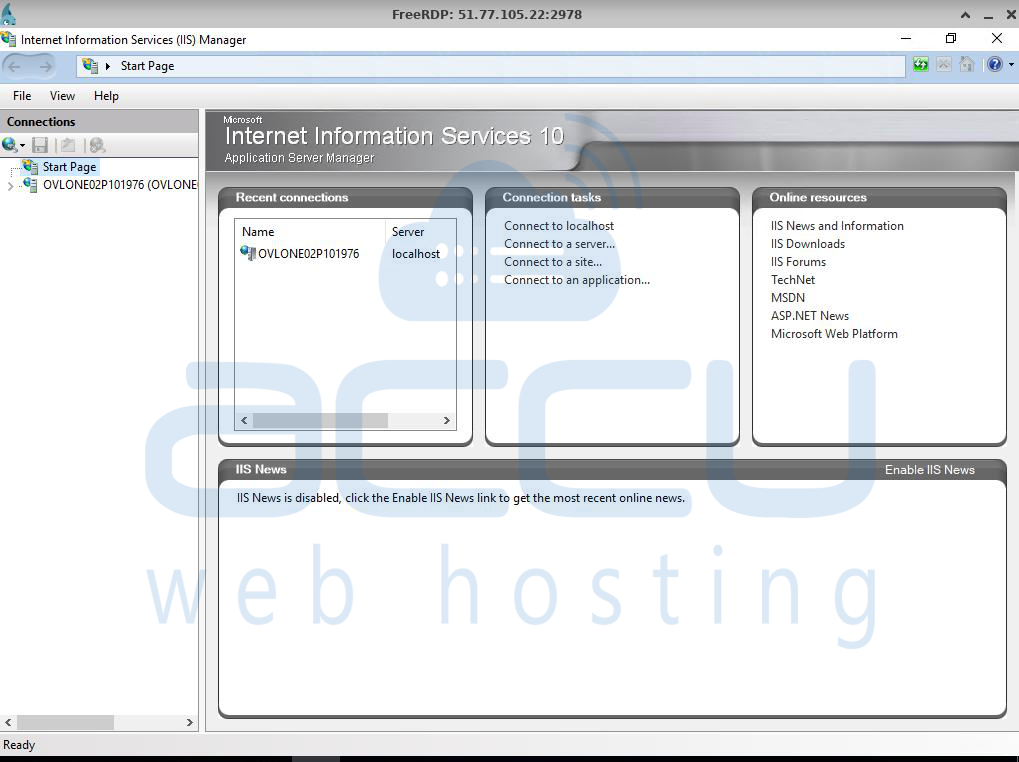
Step 2: Open IIS Manager
Click Start → Administrative Tools → Internet Information Services (IIS) Manager.
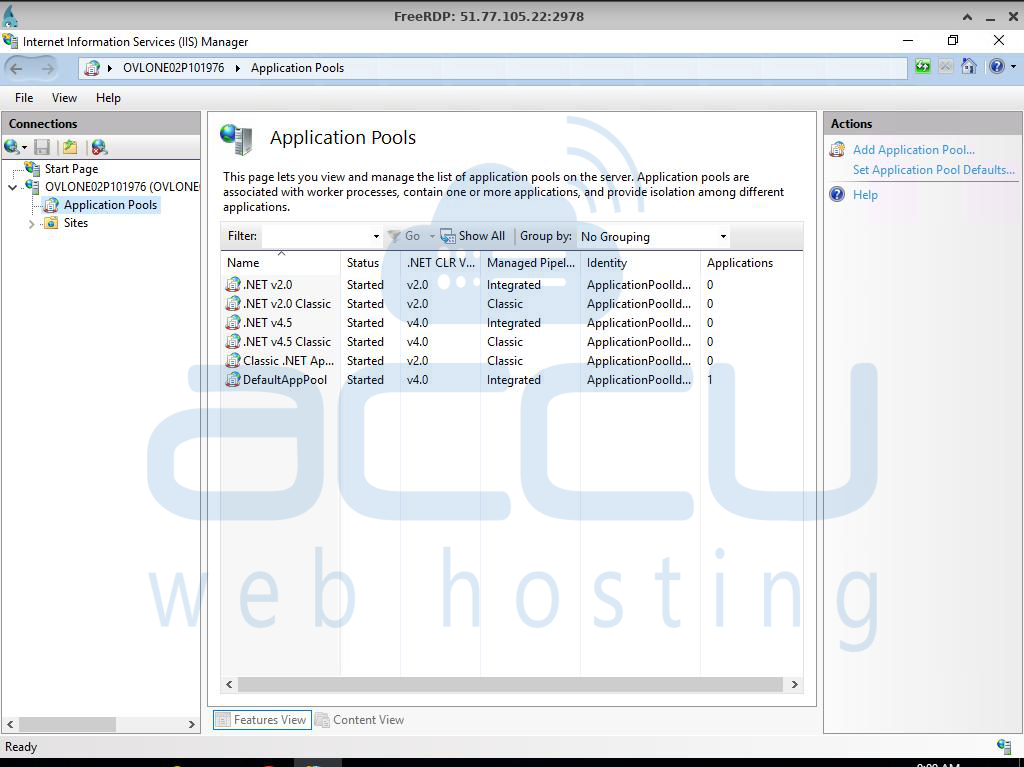
Step 3: Navigate to Application Pools
In the Connections pane, expand your server name. Click Application Pools.
Step 4: Select Application Pool
Select the application pool you want to configure for periodic recycling.
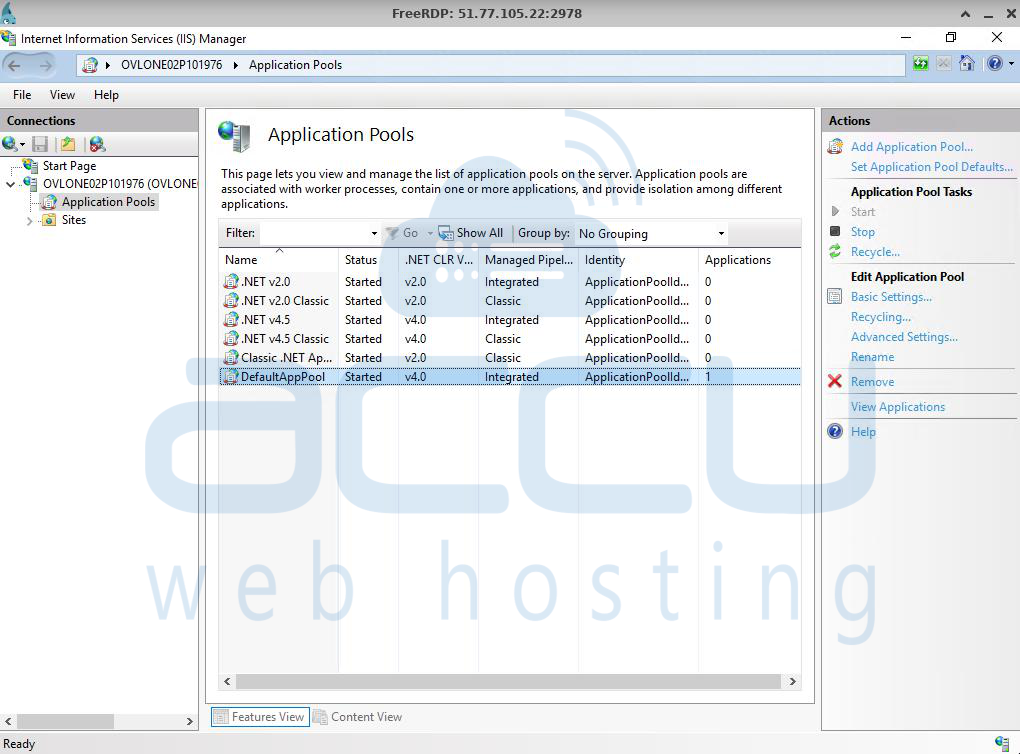
Step 5: Open Recycling Settings
In the Actions pane on the right, click Recycling
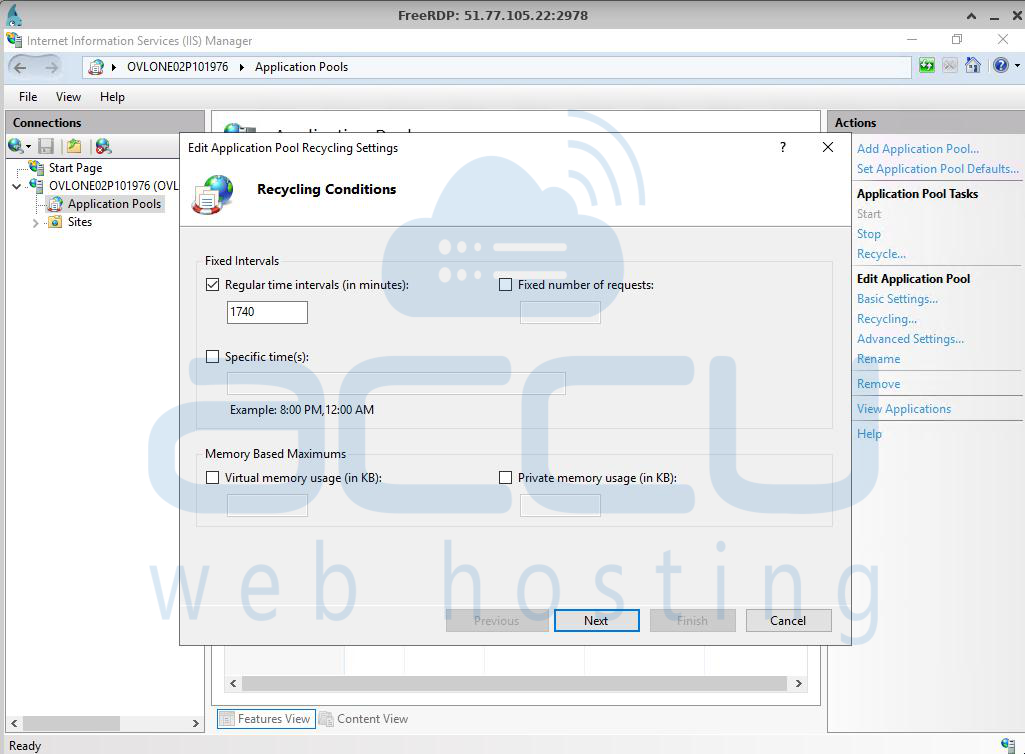
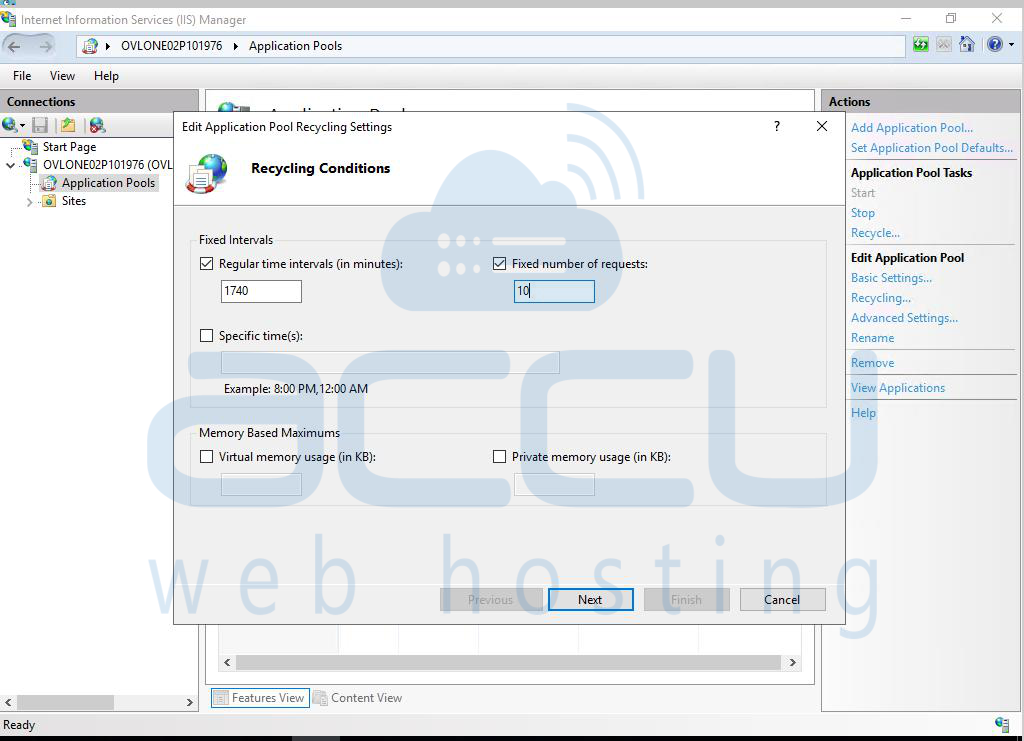
Step 6: Configure Recycling Conditions
In the Edit Application Pool Recycling Settings Wizard, select at least one of the available recycling conditions:
- Regular time intervals (minutes)
- Specific times of day
- Number of requests
- Memory-based recycling (virtual or private memory)
Enter the appropriate value for each selected option.
Step 7: Configure Logging Events
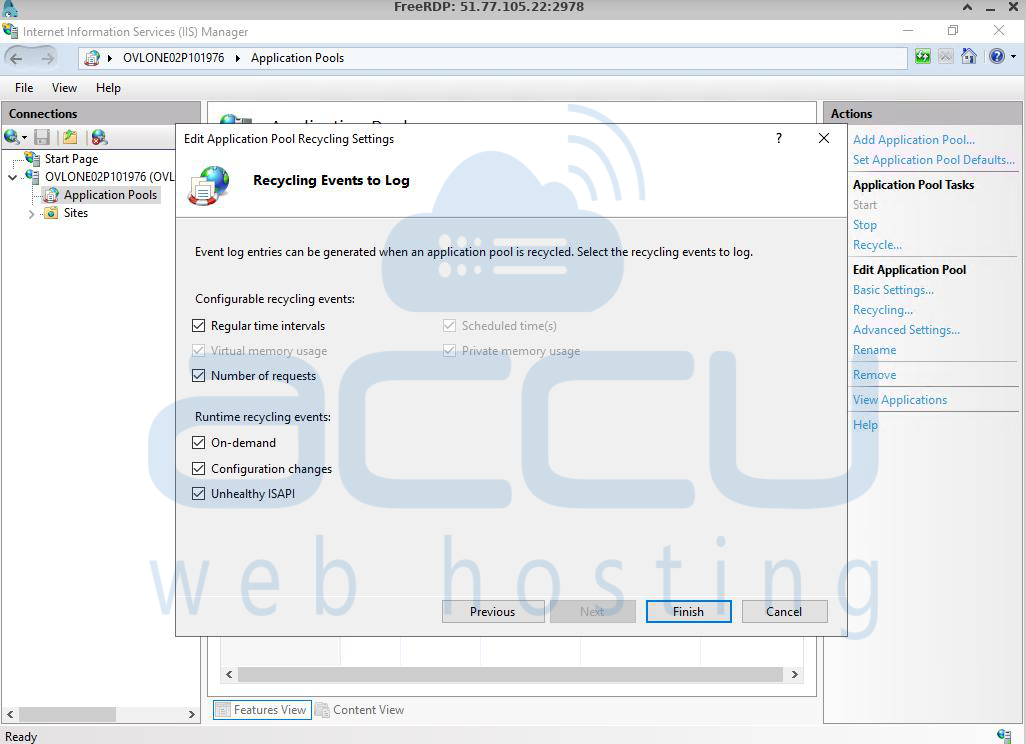
Click Next to go to the Recycling Events to Log screen. Select which events you want IIS to record in the log:
- Log recycling due to memory limits
- Log recycling due to a specific time
- Log other custom events
This helps track when and why application pools were recycled.
Step 8: Apply the Settings
Click Finish to save and apply the changes. The application pool will now recycle based on the configured conditions.
Conclusion:
By setting up periodic recycling for application pools, you proactively manage memory and application health. This simple configuration step helps prevent downtime, improve server performance, and ensure your web applications remain responsive.