
A fast-loading site is crucial for user experience and SEO. Faster websites keep users engaged, reduce bounce rates, and increase conversions. Google also ranks fast sites higher in search results.
Many factors affect website speed, from coding to hosting. One effective way to speed up a site is through web caching.
Web caching saves copies of your site data for future use. Instead of downloading data from the server each time, visitors see cached files, making your site load faster.
However, cached files can expire, which can prevent visitors from seeing updated content.
To fix this, we'll show you how to clear WordPress cache using popular plugins and how to remove browser cache for better results.
What Is WordPress Cache?
A cache is a temporary storage for static content like HTML, JavaScript, CSS, and media files.
When you visit a website, your browser asks the site’s server for content. This can take some time, but web caching speeds up the process.
Web caching saves the site’s static content as cache files. This means your browser makes fewer requests to the server since it already has the cached content.
Type of Web Caching
There are two main types of web caching:
Client-side caching (browser cache): This stores static content in your browser’s local storage. When you revisit the site, it loads faster because the cached content is already in your browser.
Server-side caching: This stores cached data on the server. It can handle various site data from multiple databases, making it ideal for high-traffic websites.
Overall, web caching improves site performance by reducing the number of server requests and using fewer network resources, which is helpful for sites with limited bandwidth.
How to Clear Cache in WordPress?
Sometimes, when you make changes to your WordPress site, the updates don’t show up. This happens because your server is still showing the old cached version of your pages.
Clearing the WordPress cache usually solves this problem. When the cache is empty, the system can store the updated data and show it to your visitors.
The easiest way to clear the cache in WordPress is by using plugins. The next section will explain how to do this with four popular WordPress caching plugins and how to clear the cache when using Cloudflare.
1. Clear Cache with LiteSpeed
Use the LiteSpeed Cache for WordPress (LCWP) plugin to manage your cache effectively. This plugin uses LiteSpeed server cache to speed up your site and includes special LiteSpeed optimization features.

All AccuWeb Hosting plans, including those optimized for WordPress, are powered by LiteSpeed and come with the plugin pre-installed. If you use a different host, you can download the plugin from the WordPress plugin directory.
The LiteSpeed Cache plugin provides several ways to clear your cache, such as automatic purges based on conditions or scheduled purges for specific URLs. Here’s how to do it:
Step 1: Install and activate the plugin, then access your WordPress admin dashboard and go to LiteSpeed Cache.
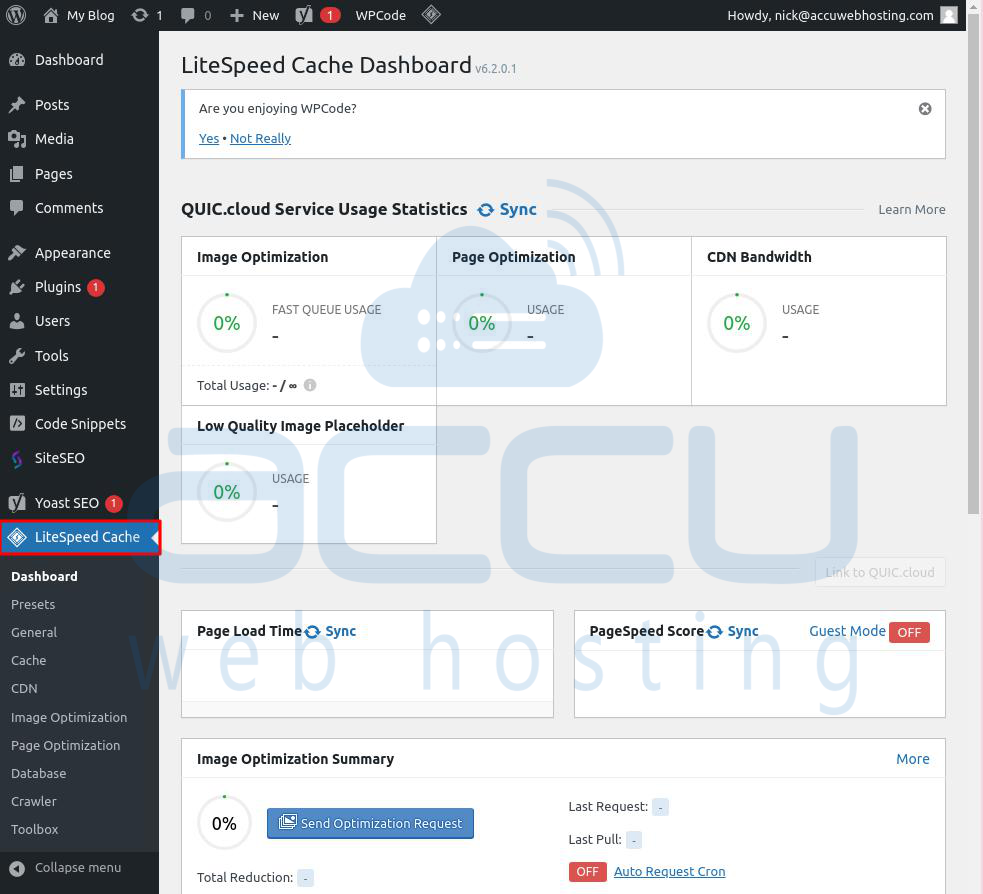
Step 2: Select the Toolbox menu to open the LiteSpeed Cache Toolbox.
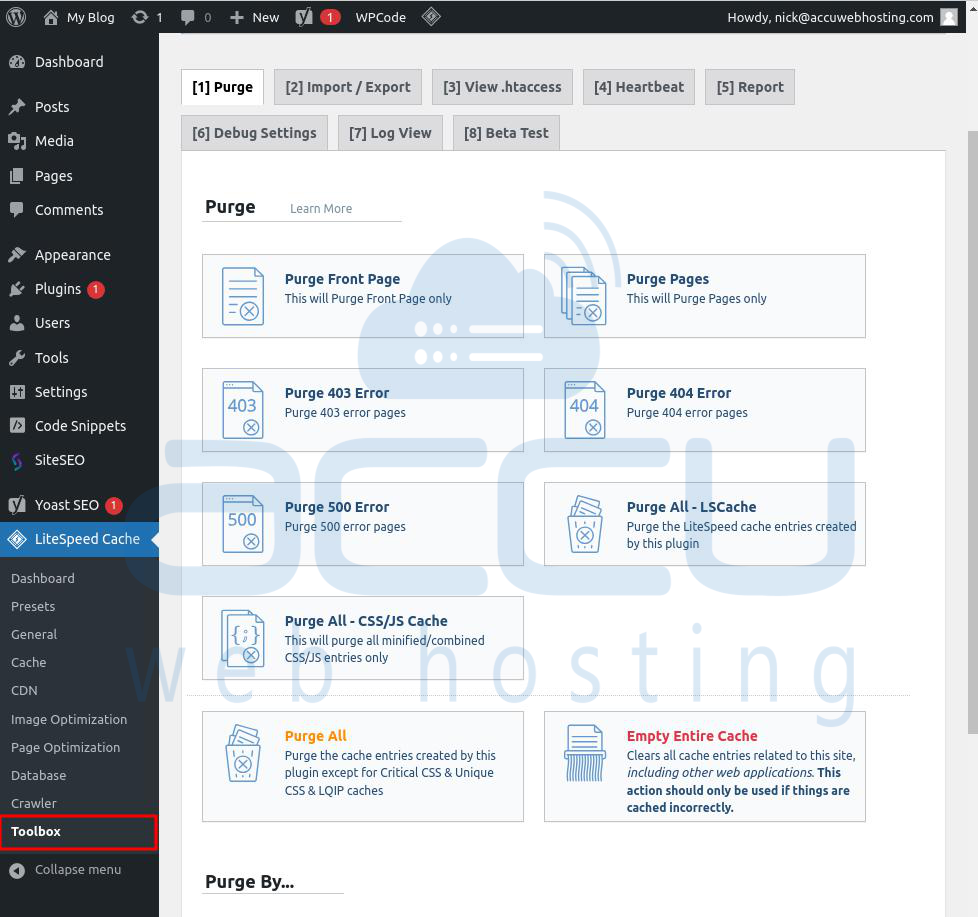
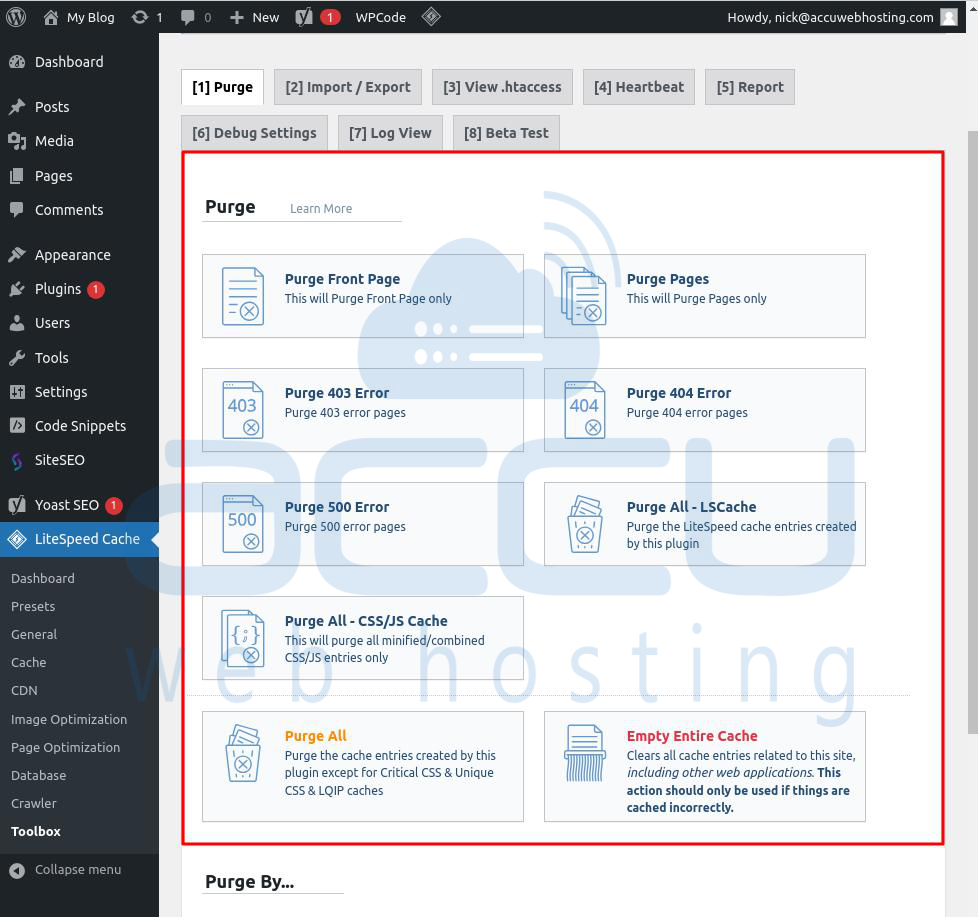
Step 3: Choose the type of cache you want to purge, like page cache or CSS/JS cache.
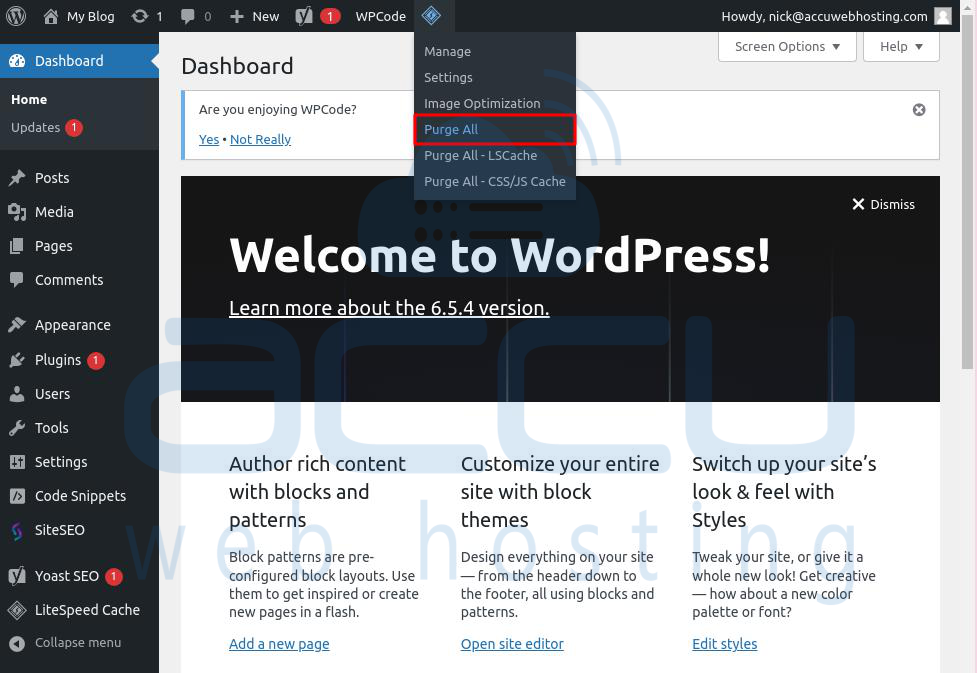
Step 4: To clear all WordPress cache, select Purge All. This won't delete critical data.
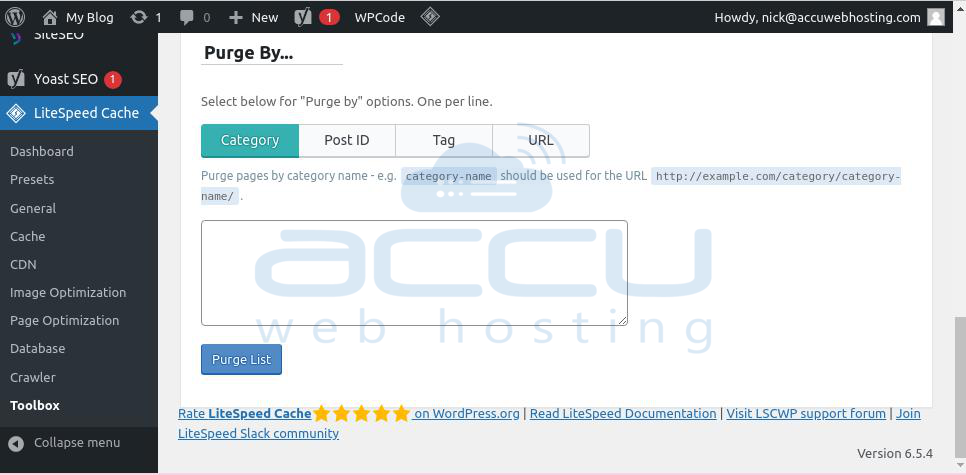
Step 5: To clear cache from specific parts of your site, use the Purge By section to input content using a category, tag, or URL.
You can also clear a specific page's cache by visiting it while logged in as an administrator. Hover over the LiteSpeed icon in the admin bar and choose Purge this page.
2. Clear Cache With WP Super Cache
WP Super Cache improves your WordPress site's caching with three modes: WP caching, Simple, and Expert.
- Expert and Simple Modes: Both serve super cached files, ideal for high-traffic sites. The Expert mode rewrites rules in your .htaccess file for faster performance.
- WP Caching Mode: This caches logged-in users, like those who comment or store personal info on your site.
You can clear cache files with one click using WP Super Cache. Here’s how:
Step 1: Go to Settings -> WP Super Cache in your WordPress admin dashboard.
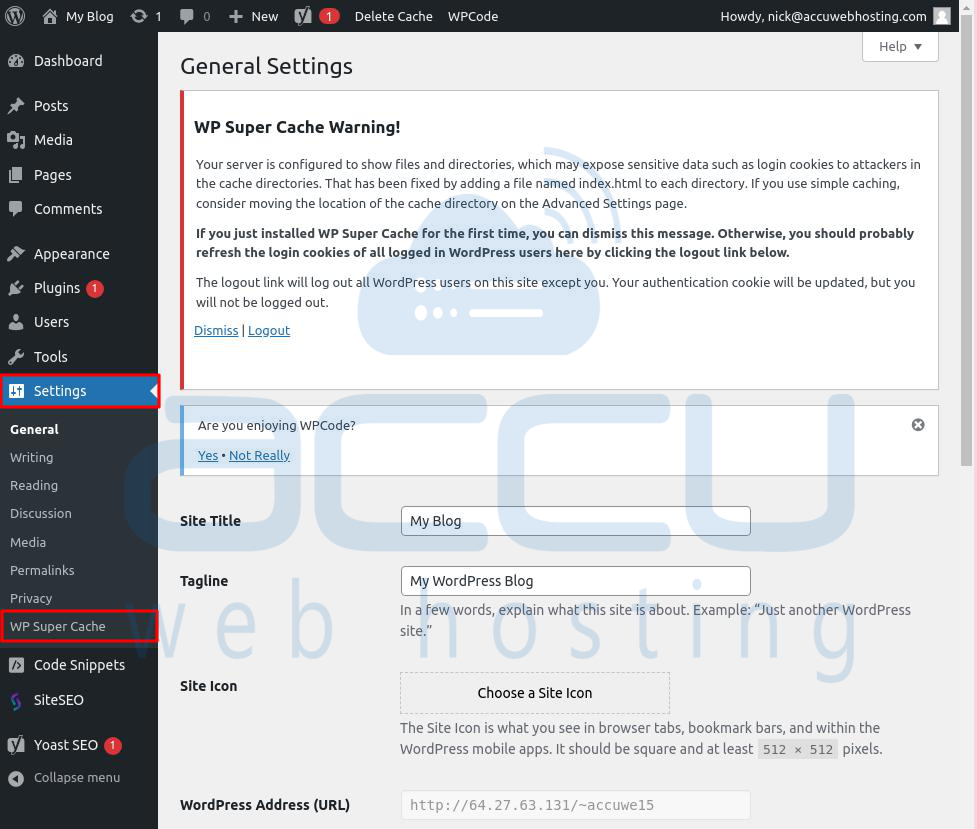
Step 2: On the WP Super Cache Settings page, scroll to the Delete Cached Pages section and click Delete Cache.
WP Super Cache also offers a feature called garbage collection, which automatically clears old cache files. Here’s how to set it up:
Step 1: Go to Settings -> WP Super Cache -> Advanced. Scroll to Expiry Time & Garbage Collection.
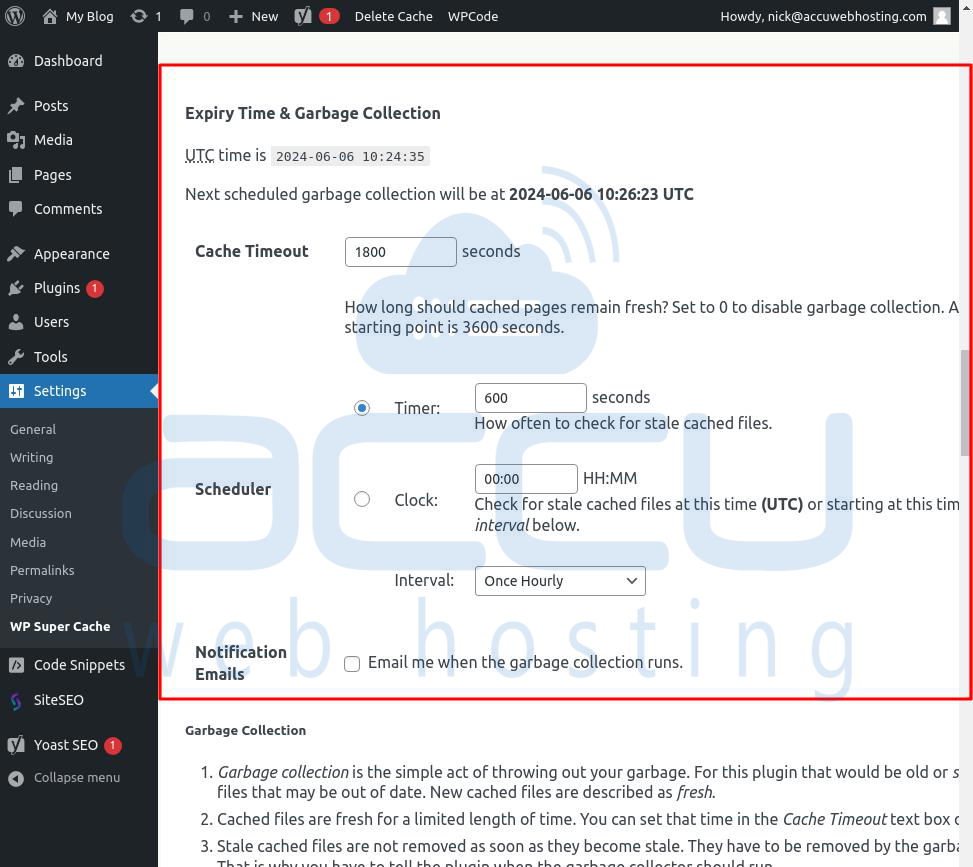
Step 2: Set your cache timeout and interval as needed.
-> For infrequent updates, set to 3600 seconds.
-> For busy sites, like eCommerce, set to 600 seconds.
Step 3: Click Change Expiration to save changes.
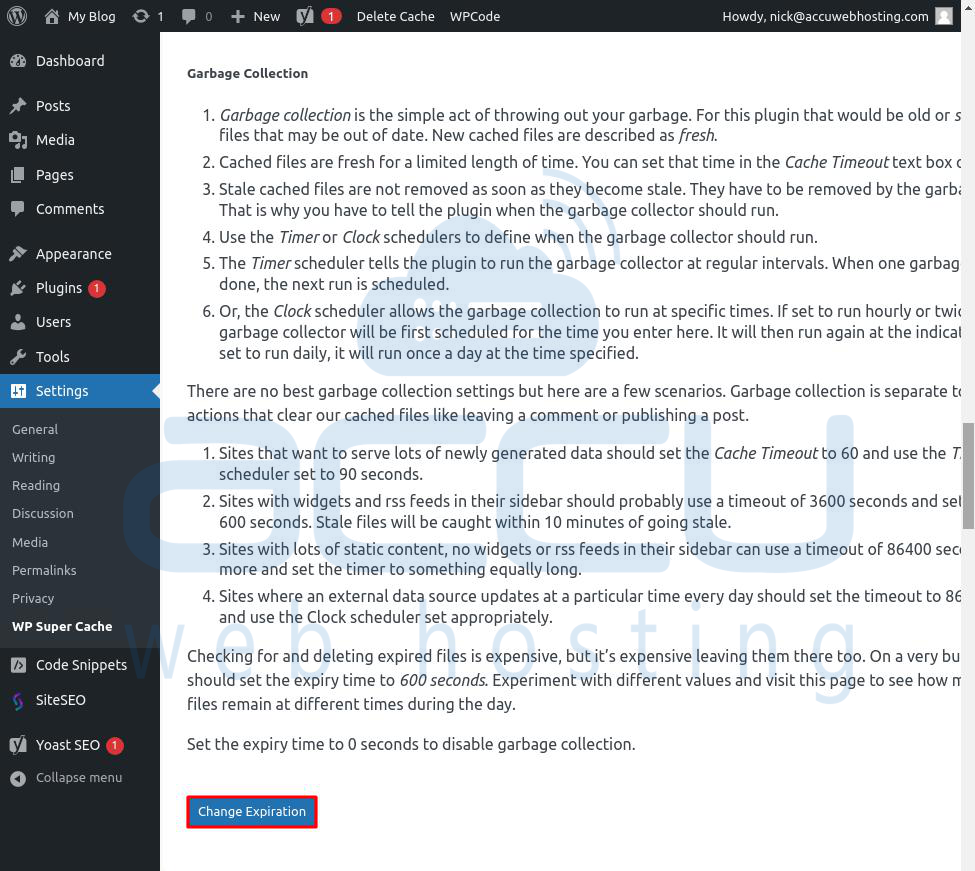
Step 4: To disable garbage collection, set the cache timeout to 0 seconds.
3. Clear Cache With W3 Total Cache
W3 Total Cache is a popular plugin known for its customization and bandwidth-saving features. It reduces bandwidth usage by up to 80% through minification, feed optimization, and HTTP compression. The plugin supports various types of caching, including browser, database, and site cache.
It also supports AMP for better SEO and has a WP-CLI interface for tasks like cache purging and query string updating.
Here’s how to clear the cache with W3 Total Cache:
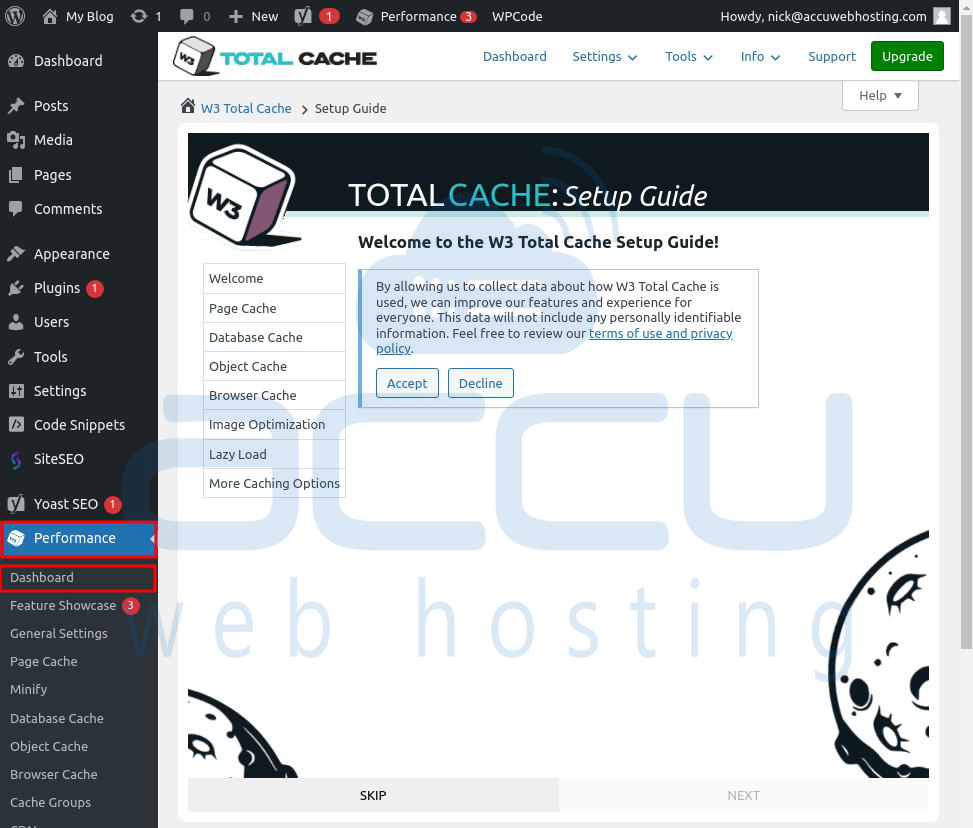
Step 1: Install the plugin, then go to your WordPress admin area and navigate to Performance -> Dashboard.
Step 2: Click the empty all caches button at the top of the page.
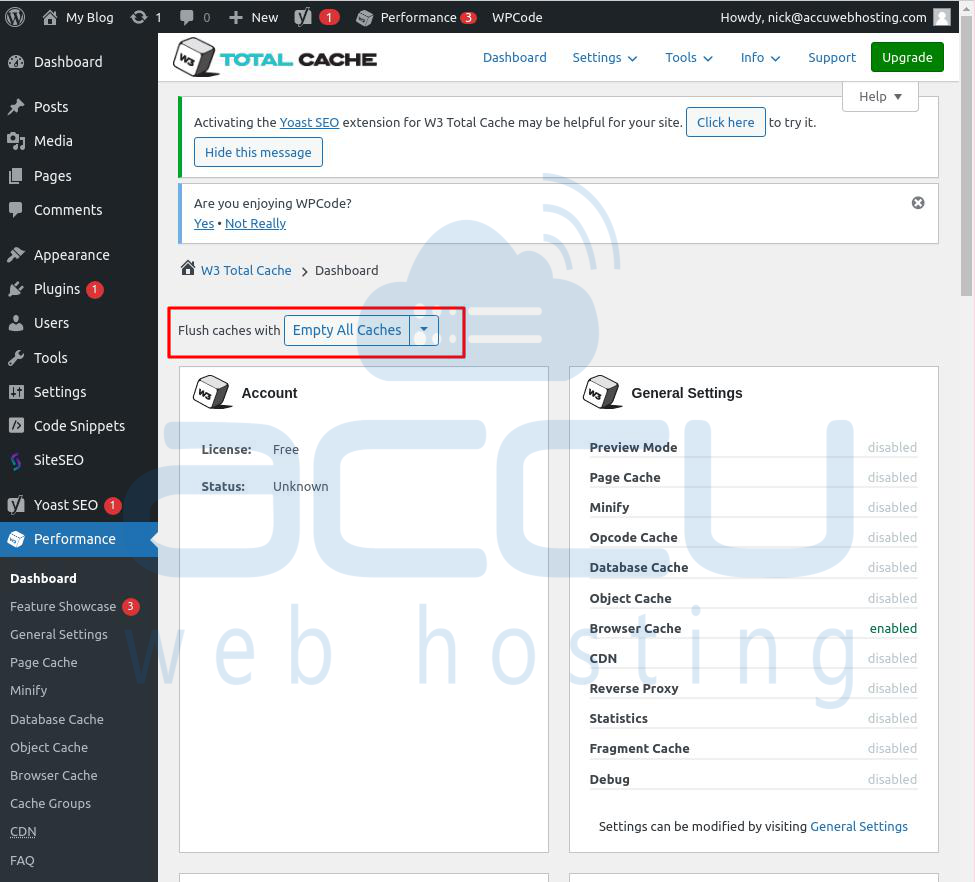
Step 3: The system will clear your cache, and you'll see a confirmation message when it's done.
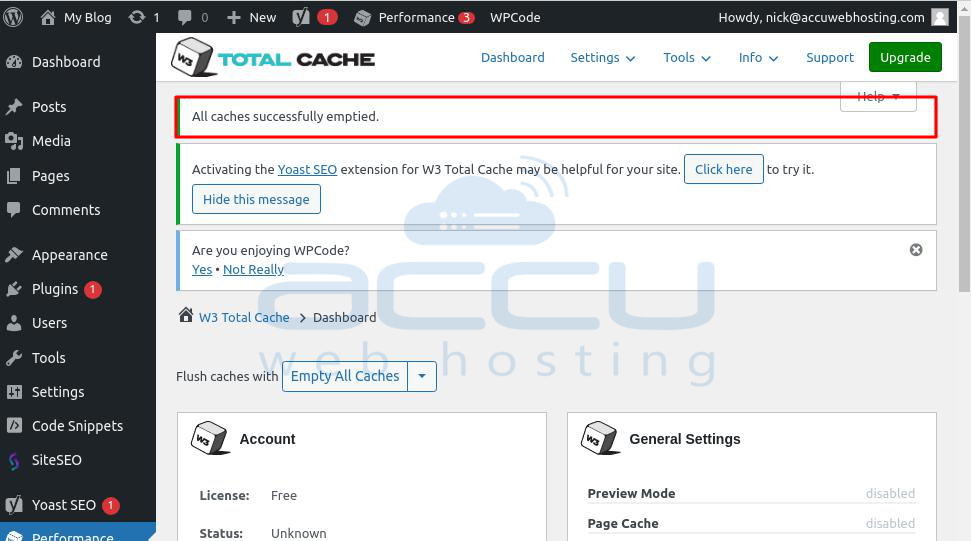
Step 4: Besides the empty all caches button, there are other buttons for clearing specific cache types, like the Memcached cache. Click the appropriate button to start the action.
4. Clear Cache with Cloudflare
You can use Cloudflare, a content delivery network (CDN), to clear cache in WordPress. Cloudflare offers features like cache control, fast cache purge, and web cache protection to improve your site’s performance.

To set up Cloudflare and clear your WordPress cache, follow these steps if your host doesn't automatically configure Cloudflare:
Step 1: Create a Cloudflare account.
Step 2: Add your domain name and wait for the system to find your DNS records.
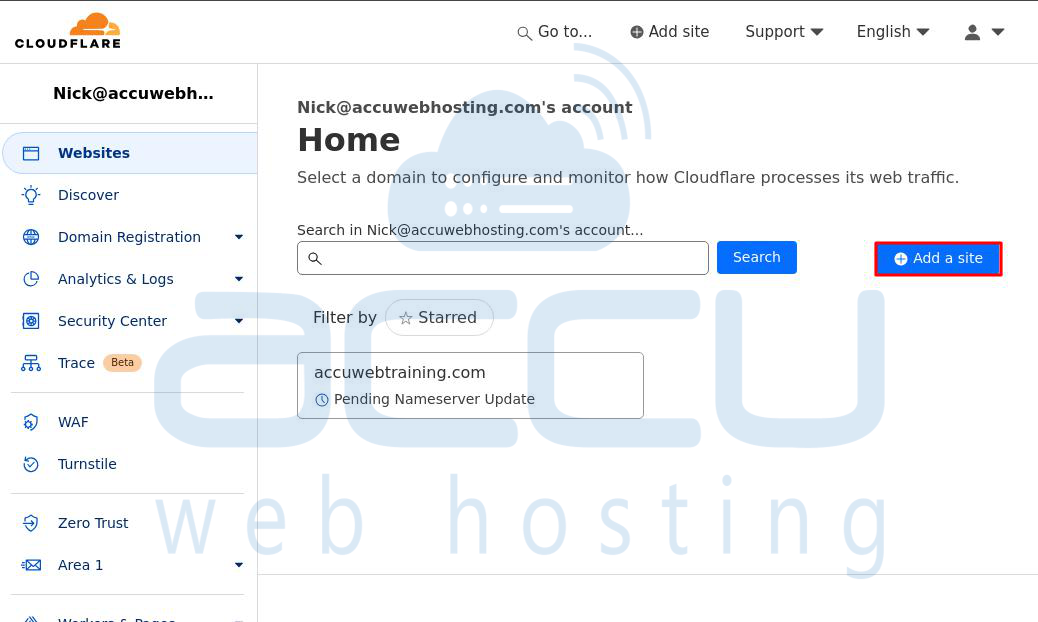
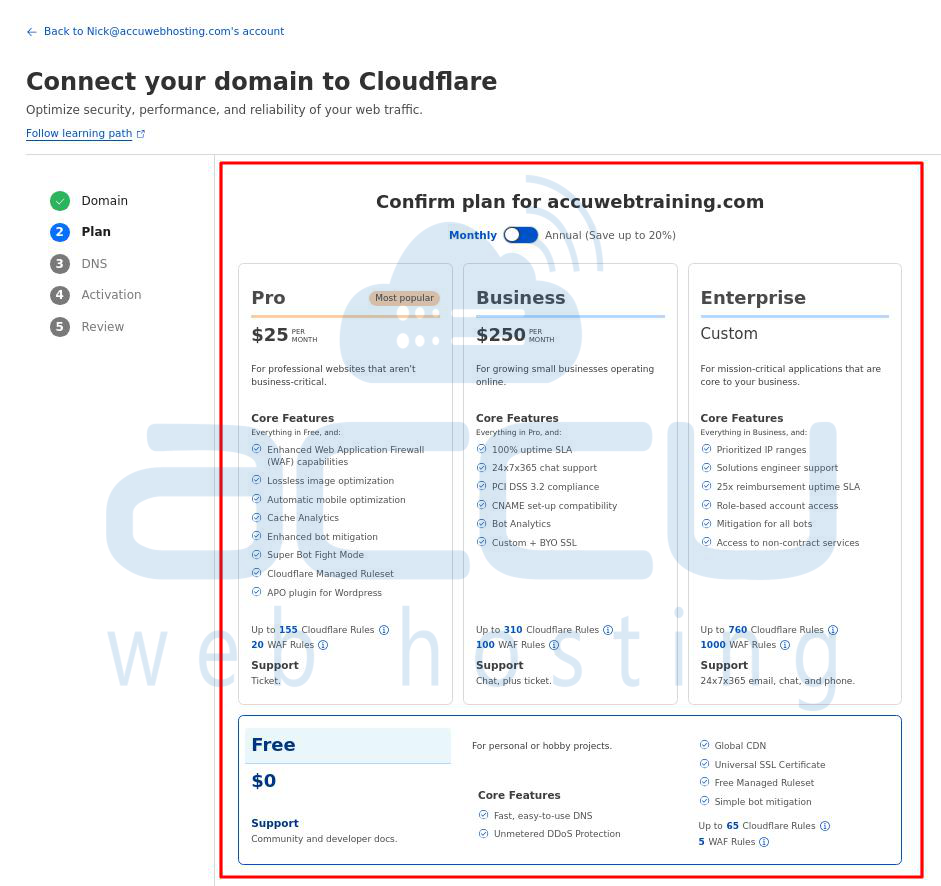
Step 3: Select a plan level.
Step 4: When Cloudflare provides the required nameservers, copy the values and update your nameservers from your hosting account dashboard.
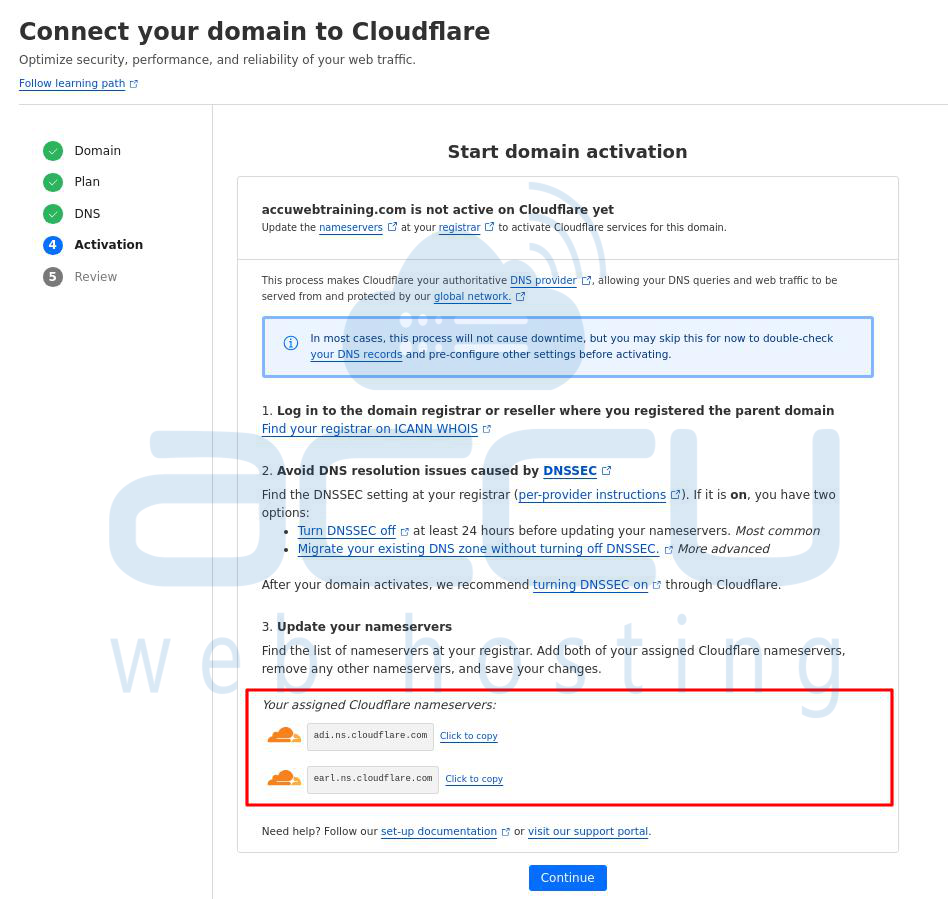
Once your domain is pointed to Cloudflare, follow these steps to clear your WordPress cache:
Step 1: Log into your Cloudflare dashboard and click on your WordPress site’s domain.
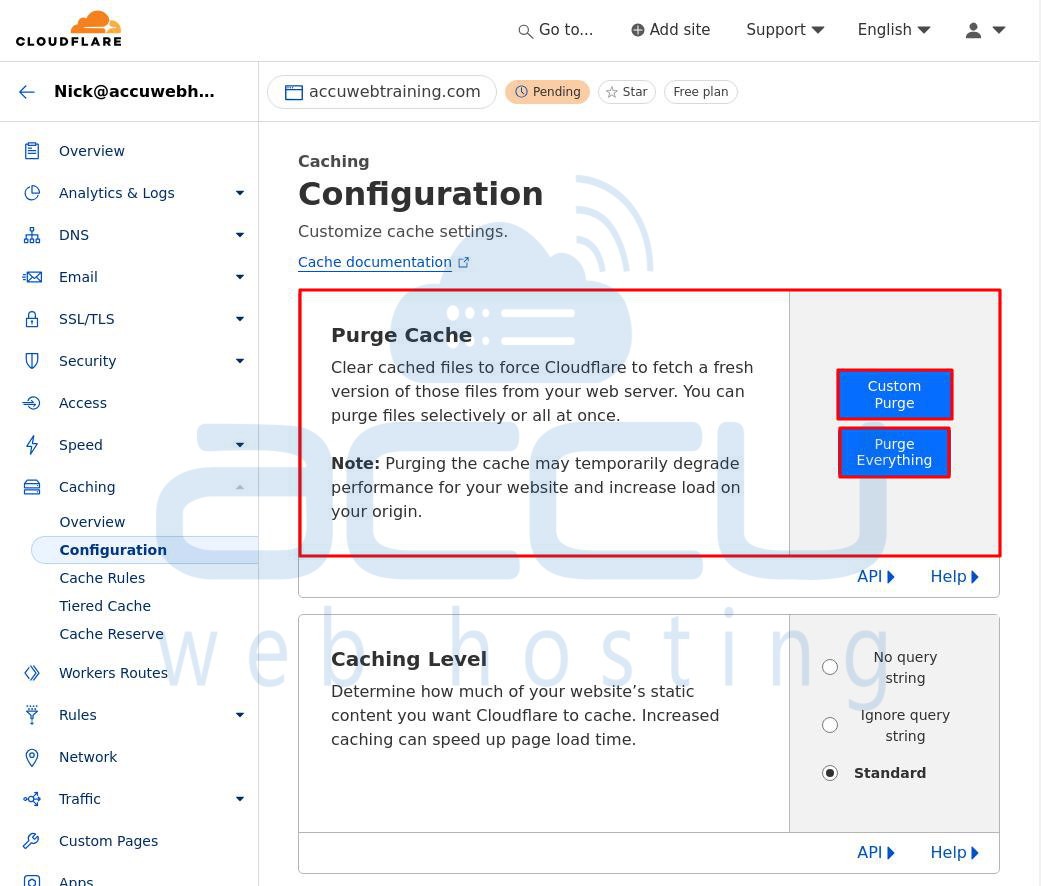
Step 2: Go to the Caching menu and click Configuration.
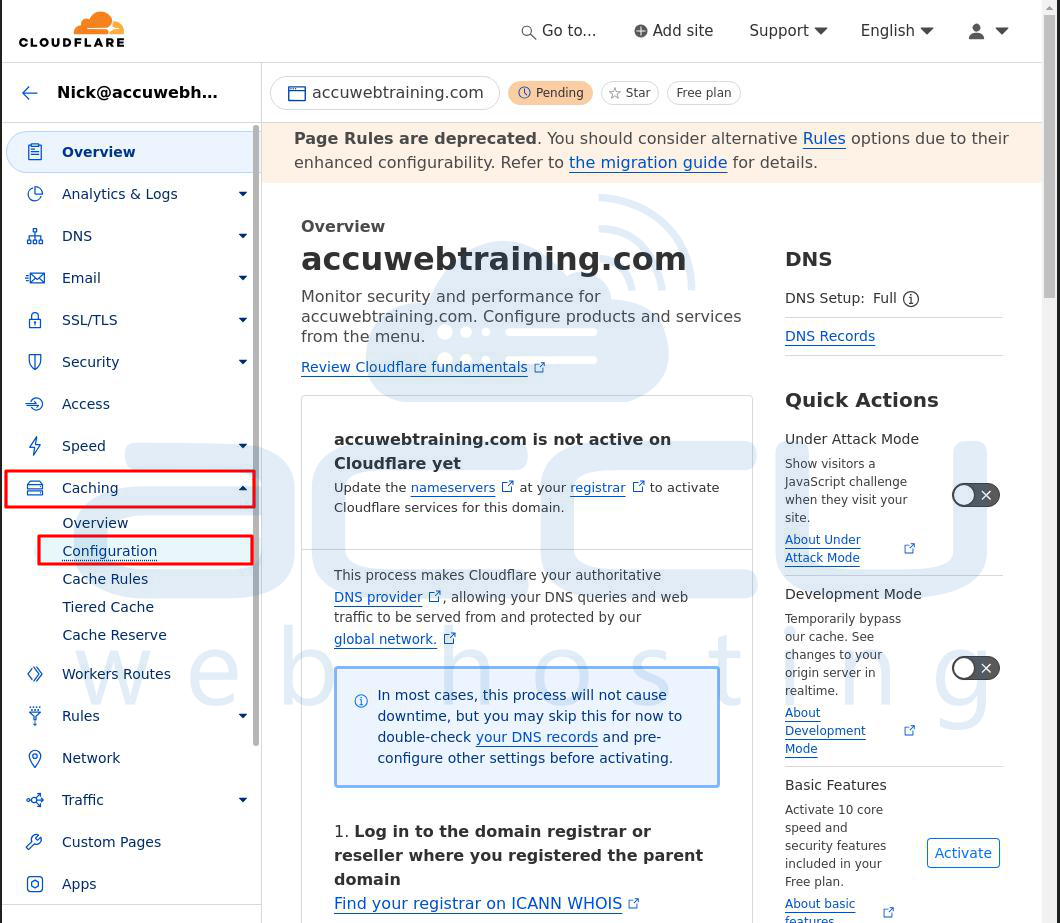
Step 3: Choose how you want to clear the cache. To clear all cache files, click the Purge Everything button. To clear specific pages, choose Custom Purge and enter the pages you want to purge.
5. Clear Cache in a Browser
Clearing your browser cache helps fix loading and formatting issues by removing outdated files, allowing your browser to load a fresh version of your site. It can also resolve server-related errors like 502 Bad Gateway and 504 Gateway Timeout.
Keep in mind that clearing the cache might also delete some of your browser data, like bookmarks and settings. Make sure to export your data first so you can import it back after clearing the cache.
Here’s how to clear the cache in Google Chrome (similar steps apply to other browsers):
Step 1: Open Google Chrome.
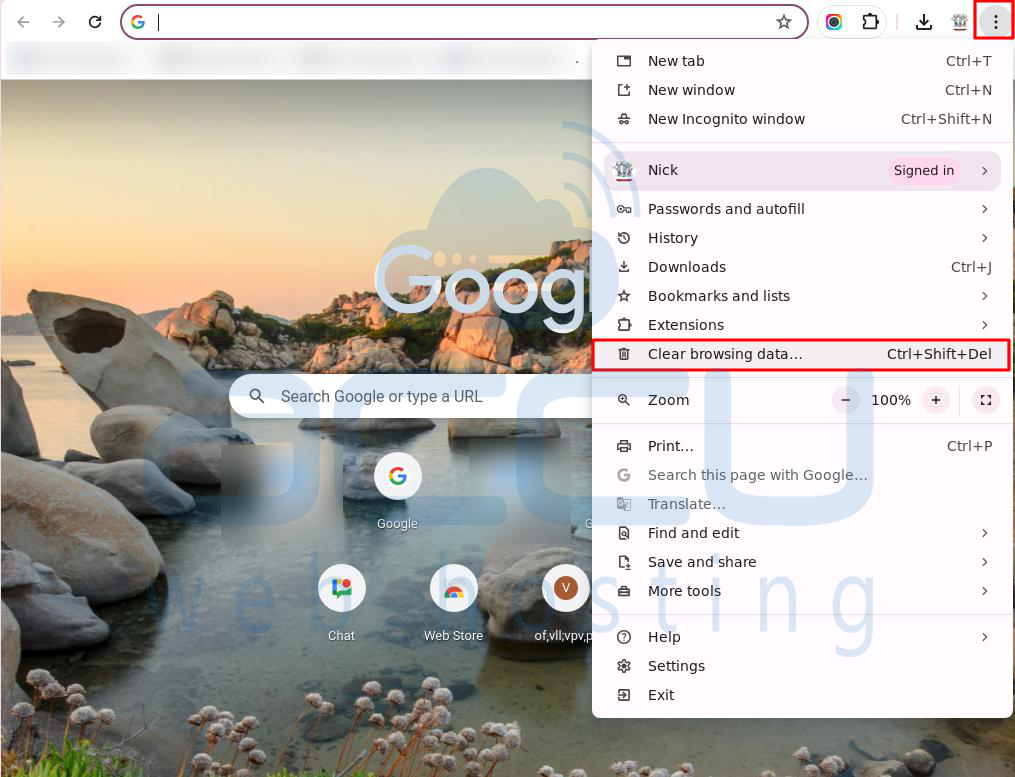
Step 2: Click the three-dot menu (⋮) at the top right corner.
Step 3: After that, click on the Clear browsing data option.
Step 4: You’ll see options for Basic or Advanced cache clearing.
Step 5: Select your preferred method, set the time range, and check the boxes as needed. Leave the "Passwords and other sign-in data" option unchecked to keep your login credentials.
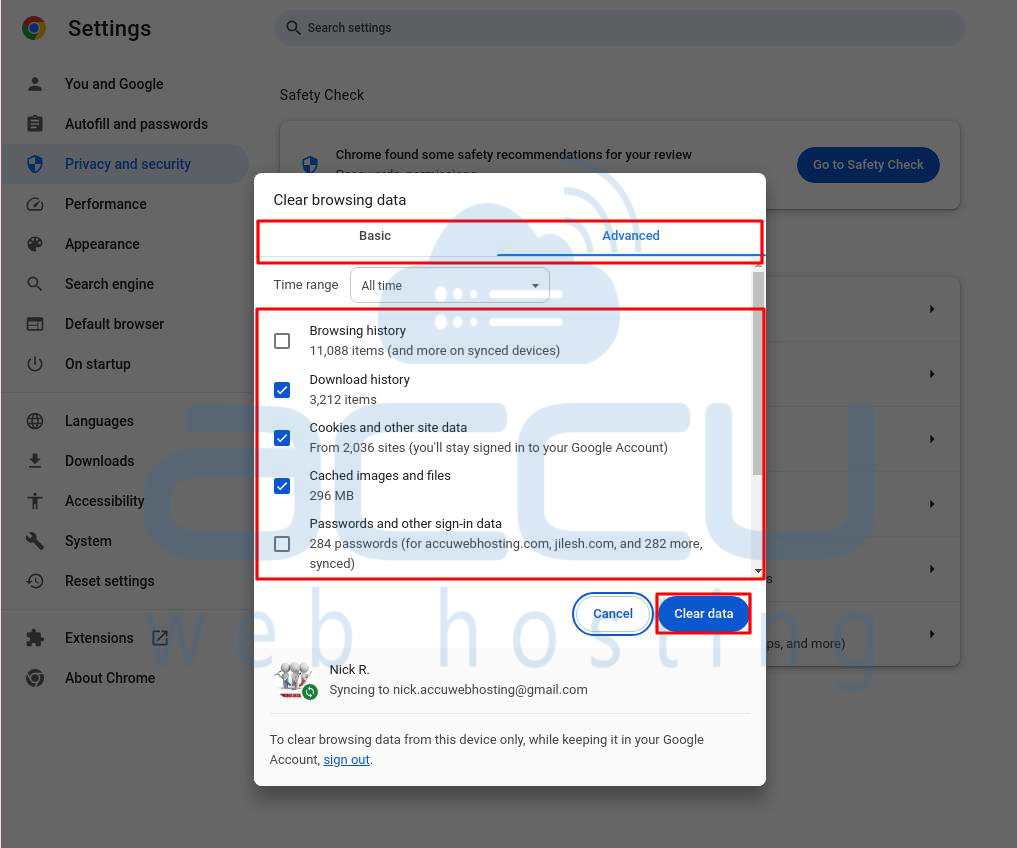
Step 6: Click Clear data.
Conclusion
Caching helps your website load faster by storing copies of static content for future use. However, outdated cache files can stop visitors from seeing new changes on your site. Clearing your website cache can fix this. This guide showed how to clear cache in WordPress using popular plugins. If that doesn't work, try clearing your browser cache too. Remember, once the cache is cleared, browsers and servers will take some time to download the files again, which might make loading slightly slower at first.