
Generating a Certificate Signing Request (CSR) is a critical step when setting up SSL for a web server. OpenSSL is a widely used command-line toolkit for this purpose. It helps generate a private key and CSR file, which you can then submit to a Certificate Authority (CA) to obtain an SSL certificate.
This guide explains how to generate a CSR for an Apache 2.x web server on a Linux system.
Step 1: Log in to your Linux server via SSH.
Use your terminal or SSH client to connect to the server where the certificate will be installed.
Step 2: Run the OpenSSL command to generate the CSR and private key.
# openssl req -new -newkey rsa:2048 -nodes -keyout your-domain-name.key -out your-domain-name.csr
Replace your-domain-name with your actual domain (e.g., example.com).
This command will generate:
- A private key file: your-domain-name.key
- A certificate signing request file: your-domain-name.csr

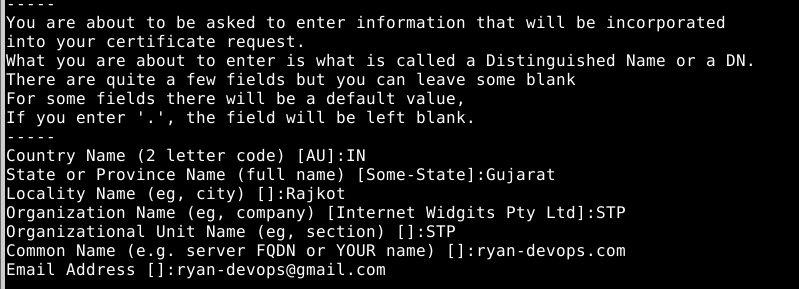
Step 3: Enter the required details when prompted:
You’ll be asked to provide the following information:
- Common Name: The fully qualified domain name (FQDN) for your website.
For Wildcard SSL, prefix with an asterisk (e.g., *.your-domain.com). - Organization: Your legal organization name.
- Organizational Unit: Department or division (optional).
- City or Locality: Full name of your city (no abbreviations).
- State or Province: Full name of your state or province (no abbreviations).
- Country: Two-letter ISO country code (e.g., US, IN).
Step 4: Locate the generated files.
Both .csr and .key files will be created in the directory where the command was executed.
Step 5: Open the .csr file using a text editor.
# nano your-domain-name.csr
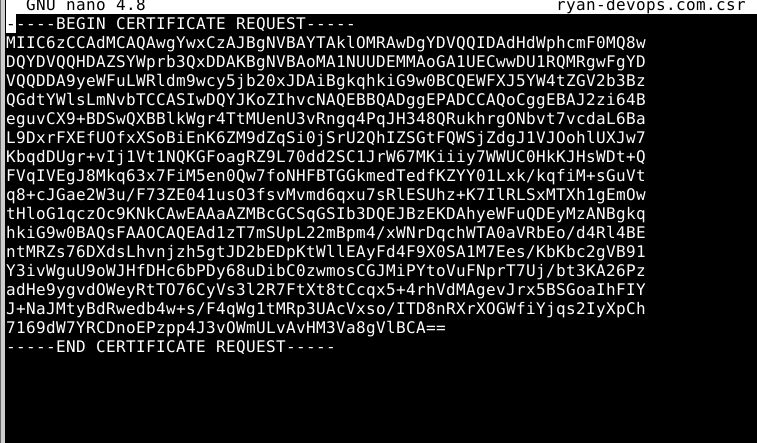
Copy the full contents of the CSR file, including the -----BEGIN CERTIFICATE REQUEST----- and -----END CERTIFICATE REQUEST----- lines.
Step 6: Submit the CSR to your Certificate Authority (CA).
Paste the copied content into your CA’s SSL certificate request form.
Step 7: Open the .key file to view or store the private key.
# nano your-domain-name.key
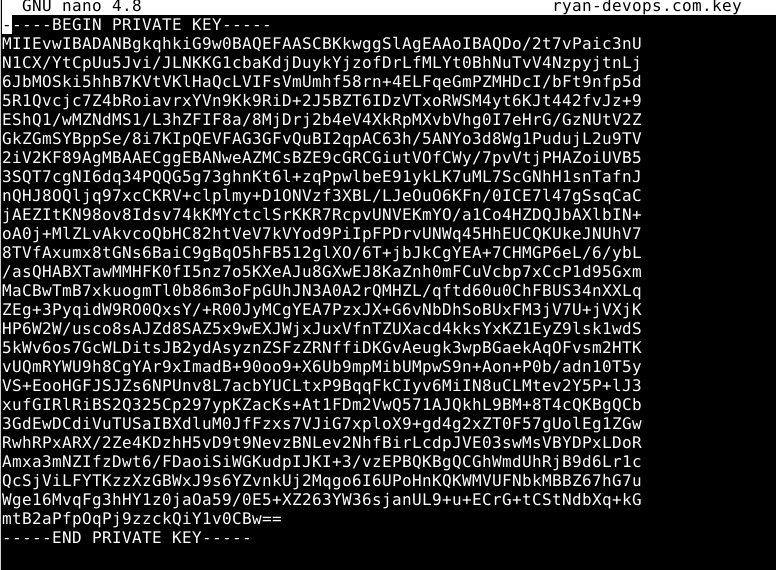
Keep this file secure—it’s required to install the SSL certificate and should not be shared publicly.
Conclusion:
Using OpenSSL to generate a CSR and private key is a straightforward but essential step in securing your web application. Ensure the domain details you enter are accurate, and always keep your private key safe. Once you've submitted your CSR to the CA, you'll receive the SSL certificate required to secure your Apache server.